In this guide +
For most of the year, Pakistan is warm — and often humid. Karachi's humidity peaks in late summer; according to weather-and-climate.com, "the city experiences its highest humidity in August, reaching 82%," while inland cities push past 40°C in early summer. In that climate, the fabric touching your skin all day is not a small detail. It decides whether you feel fresh or clammy by mid-afternoon.
Here is how the main underwear fabrics behave, and how to match them to real days.
The one rule that matters most: the gusset
Whatever the outer fabric, the small panel that sits against your body — the gusset — is the part that counts for comfort and hygiene. Health experts consistently recommend cotton here because it breathes. As Cleveland Clinic's Dr Erica Newlin puts it, "the best material for underwear is cotton… it's breathable. Cotton undies wick away excess sweat and moisture that bacteria and yeast thrive on." A large survey published in the Journal of Obstetrics and Gynaecology Research (Hamlin et al., 2019, n=986) similarly found that "wearing noncotton crotch underwear was associated with yeast vaginitis," while underwear style was not. So: if you love a lacy or seamless outer, simply check that the gusset is cotton. (This is general educational information, not medical advice.)
Cotton — the everyday default
Cotton is soft, breathable, absorbent and gentle on sensitive skin. Its one limitation in extreme humidity is that it absorbs moisture and then holds it, so it can feel damp after heavy sweating. For everyday wear, sleep and sensitive skin, it remains the reliable first choice.
Cotton blends — comfort with staying power
Most modern underwear is a blend, typically cotton with a little elastane (spandex) for stretch and shape retention. A cotton-rich blend with a cotton gusset gives you breathability and a fit that holds through a long day.
Modal — the hot-weather upgrade
Modal is a soft, semi-synthetic fibre made from beech-tree pulp. It is smoother than cotton, resists shrinking and pilling, and manages moisture well — several textile sources note it absorbs more moisture than cotton yet releases it faster, which is exactly what you want in humidity. For long, hot days and active routines, a modal or micro-modal blend (with a cotton or cotton-lined gusset) is a genuine step up in comfort.
Microfiber — smooth and quick-drying
Microfiber is an ultra-fine synthetic (usually nylon or polyester based). It feels silky, sits invisibly under fitted clothing and dries very quickly, which suits travel and active days. The trade-off: pure synthetics breathe less than natural fibres, so choose microfiber styles with a cotton gusset and avoid wearing them for very long stretches in extreme heat.
Nylon and polyester — durable, but breathe less
These synthetics are strong, hold their shape and dry fast, but on their own they trap heat and moisture. They are best in blends, or for specific needs (shaping, sport) rather than as your everyday hot-weather default.
Mesh — targeted airflow
Mesh panels let air pass straight through, which can help with ventilation. Used as part of a design (rather than head-to-toe), mesh adds breathability without sacrificing coverage.
Lace — beautiful, best in moderation
Lace is lovely for special occasions, but its texture can print through thin lawn and georgette, and unlined lace against the skin is less breathable. Reserve it for thicker fabrics and occasions, and check for a cotton gusset.
Elastane and stretch
Elastane (spandex/lycra) is the few percent that gives underwear its stretch and recovery. You want enough for a fit that moves with you, but the bulk of the fabric — especially the gusset — should still be breathable.
Match the fabric to the day
- Everyday, heat and humidity: cotton or a modal blend with a cotton gusset.
- Sleep: soft cotton; loose and breathable.
- Exercise / very active days: moisture-wicking modal or microfiber, changed promptly afterwards.
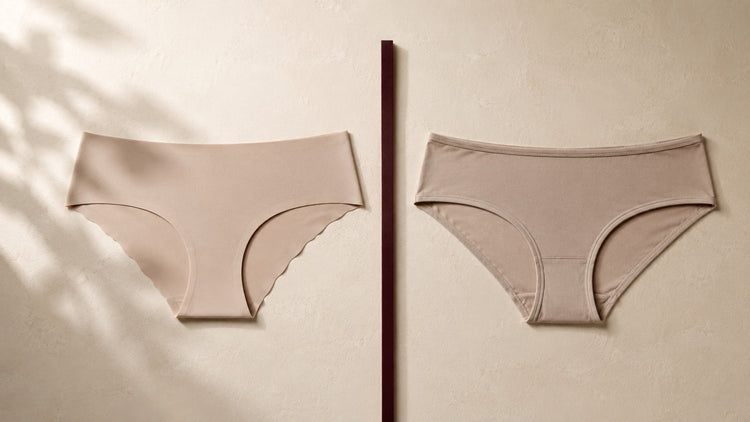
- Under fitted lawn or light-coloured kameez: smooth microfiber or seamless styles (see our seamless-versus-regular guide) in a shade close to your skin.
- Special occasions: lace or decorative styles — for the hours you need them.
Hygiene and moisture management
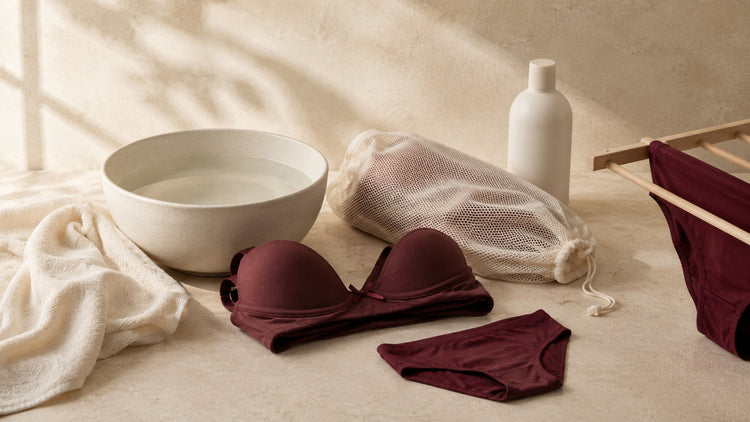
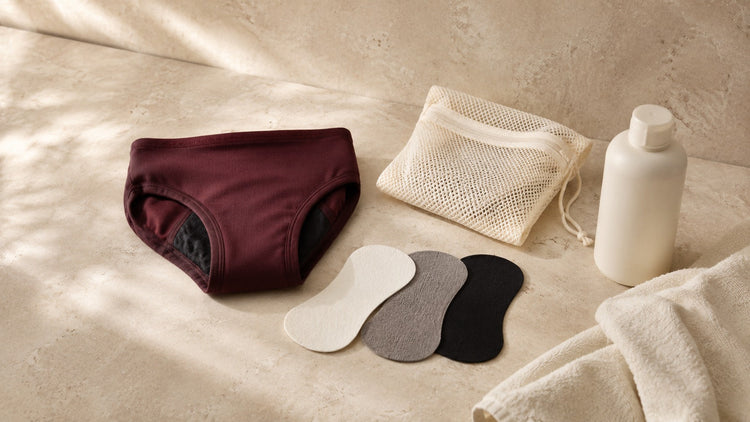
Our period-underwear explainer also discusses breathable layers and washing. A few gentle habits go a long way in a warm climate: choose breathable fabrics, change underwear daily (and after heavy sweating or exercise), and avoid very tight non-breathable styles for long periods. Washing with a mild detergent and rinsing well matters too — our care guide covers how to keep fabrics performing.
Where ELORVESSA fits in
For a broader checklist, read our guide to buying women’s undergarments online in Pakistan. When browsing ELORVESSA, review the fabric composition, gusset, stretch and coverage information available on the product page before ordering.
Frequently Asked Questions
- What is the best underwear fabric for hot, humid weather? Cotton or a modal blend with a cotton gusset — breathable and moisture-managing.
- Is modal better than cotton? Modal often manages moisture faster, which helps in humidity; cotton is more absorbent and very gentle. Many prefer a blend.
- Are synthetic fabrics bad? Not bad — just less breathable alone. Choose blends with a cotton gusset and don't wear pure synthetics for very long in heat.
- Why does the gusset matter? It is the panel touching your skin; a cotton gusset breathes and helps keep the area dry.
- Can I wear lace daily in summer? Occasionally, yes — but breathable everyday fabrics are kinder to skin in the heat.
Conclusion
In Pakistan's climate, the smartest underwear choice is simple: breathable fabric, a cotton gusset, and the right material for the day. Get that right and comfort takes care of itself.
Next Steps
When comparing ELORVESSA products, review the fabric composition and any gusset details provided before ordering, so your choice suits the weather and intended use.